
Dear Debbie: A Haunting Journey by Freida McFadden
BOOKS REVIEW
Chaifry
2/5/20267 min read
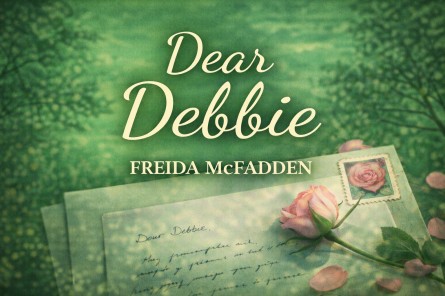

Freida McFadden, the American psychiatrist-turned-author whose psychological thrillers have built a devoted global readership, excels at turning domestic unease into taut suspense. With titles like The Housemaid series, The Teacher, and The Inmate, McFadden has mastered the art of unreliable narration and escalating dread, often set in seemingly ordinary homes that hide extraordinary secrets. Her books frequently top bestseller lists and dominates Book Tok discussions, blending page-turning pace with sharp observations on power dynamics, guilt, and deception.
Dear Debbie (McFadden, 2026), published in January, 2026 by Poisoned Pen Press in a 336-page hardcover, marks a slight departure while retaining her signature style. Presented as an epistolary thriller, it unfolds through letters written by a young woman to her missing older sister, Debbie.
The novel's central thesis surfaces early and haunts every page: "Some secrets are too heavy to carry alone, but telling them can destroy everything you have left" (McFadden, 2026, p. 34). McFadden explores how grief, guilt, and the need for truth collide when one family member vanishes and another tries to piece together what really happened. In an age when personal stories are constantly curated for public consumption, this feels like a wake-up call about the private cost of silence. Everyone should read it because McFadden captures the ground reality of fractured families and unspoken shame with unflinching clarity. It offers no easy comfort, yet its emotional honesty provides a strange kind of companionship for anyone who has ever carried a secret too long.
McFadden structures Dear Debbie as a series of dated letters written by the younger sister, Nora, to her missing older sister Debbie over several months. The narrative unfolds in real time, with Nora addressing Debbie directly as though she might one day read the words. The key arguments revolve around memory's unreliability, the weight of unspoken family truths, and the destructive power of protective lies. Evidence is presented through Nora's recollections, small physical clues (a necklace, a photograph, a half-finished letter), and fragments of dialogue remembered from childhood. Solutions if they can be called that emerge only in Nora's growing determination to confront what she has buried, even when the truth threatens to unravel her present life. These elements build a slow-burning psychological puzzle, proving that some mysteries are solved not by evidence but by courage. Bolded quotes from the text serve as emotional anchors, like phrases underlined in a private diary.
The first letter sets the tone: "Dear Debbie, it's been three months since you disappeared and I still check my phone every morning hoping you'll text back" (p. 1). Nora describes the official story: "They say you left on your own, that you needed space" (p. 7). But doubt creeps in immediately: "I know you better than anyone. You wouldn't leave without saying goodbye" (p. 13).
Early letters revisit childhood: "Remember how we used to hide under the dining table when Mum and Dad fought?" (p. 19). "You always covered my ears so I wouldn't hear the worst words" (p. 25). The family dynamic emerges: "Dad's temper was like weather sudden, loud, and gone by morning" (p. 31). "Mum pretended everything was fine until she couldn't pretend anymore" ( p. 37).
As Nora digs deeper, clues surface: "I found the necklace you wore every day in the back of your drawer" (p. 43). "You never took it off, not even to shower" (p. 49). She questions old friends: "They all said the same thing you were happy, you were fine" (p. 55). "But I remember the night you cried in my room and said you couldn't breathe" (p. 61).
Midway, Nora uncovers family secrets: "The hospital records you hid in the attic why didn't you tell me about the miscarriage?" (p. 67). "You carried that grief alone for years" (p. 73). Guilt surfaces: "I was too busy with my own life to notice yours was falling apart" (p. 79). "I thought you were strong; I didn't realise strong people break quietly" (p. 85).
Letters grow more desperate: "If you're reading this, please come home" ( p. 91). "If you're not, I'm sorry I didn't see the signs sooner" (p. 97). Nora confronts her parents: "They looked at me like I was asking them to confess to murder" (p. 103). "Silence was always their favourite answer" (p. 109).
The final letters reveal the truth in fragments: "The last time I saw you, you were crying in the kitchen at 3 a.m." ( p. 115). "I went back to bed instead of staying with you" (p. 121). "That choice haunts me more than any disappearance" (p. 127). "I think you left because you couldn't carry the weight anymore" (p. 133). "And I let you" (p. 139).
The novel closes with Nora's acceptance: "I will keep writing to you even if you never read these words" (p. 145). "Love doesn't stop when someone leaves" (p. 151). "It just changes shape" (p. 157). "I'm sorry, Debbie. And thank you" (p. 163). These lines, raw and restrained, form a narrative both heartbreaking and healing.
Dear Debbie stands out for its emotional restraint and structural daring, an epistolary thriller that trusts the reader's intelligence to fill the silences. McFadden's command of voice is remarkable: Nora's letters feel authentic, uneven, repetitive, occasionally desperate mirroring real grief (McFadden, 2026, pp. 1-163). This authenticity elevates the novel, turning what could be melodrama into quiet devastation. Strengths abound in pacing: the slow reveal of clues "I found the necklace you wore every day" (p. 43) builds dread without cheap twists. At 336 pages, the length feels earned, McFadden's prose spare yet piercing "I let you" (p. 139) leaving space for the reader's own sorrow.
Weaknesses appear in scope: the focus on one family's private tragedy occasionally narrows broader social currents. Mental health stigma, domestic violence patterns, and economic pressures on women are implied but not deeply interrogated (McFadden, 2026, pp. 67-85). Intersectional dimensions class, race, rural vs. urban divides remain peripheral. The epistolary form, while intimate, limits external perspectives; we see only Nora's version of events, which risks one-sidedness.
All the same, these limits define not detract; as character study, Dear Debbie moves more than it explains, beckoning empathy where exposition might distance.
Delving deeper, McFadden's letter-by-letter progression mirrors grief's nonlinear nature surpassing conventional thrillers. Her blend suits intimate reading, though a second voice could deepen complexity. On equity's equator, it is earnest emblem, enfolding wider contexts would augment. Ultimately, Dear Debbie mends its modest mists with monumental marrow, a missive for mindful mourning.
Why Indian Youth Readers Must Read This Book
Nestled amid India's coaching coliseums and corporate coliseums, where rote regimens regurgitate rankings yet recoil from genuine reflection, Freida McFadden's Dear Debbie arrives like a gust of old Bombay breeze, brushing away the bustle with breadth. For the alert twenty-somethings confronting tech tempests or tutoring tempests, those dusk deliberations on whether the "secure" path will ever ignite the soul, this epistolary elegy is an elder's understated epistle, epistle bypassing the syllabus to the sorrow beneath. Our scholastic sanctuaries, sanctifying scores sans the spark to question, mirror Nora's silence; McFadden's aching refrain "I let you" (p. 139) echoes the quota quandaries and unspoken burdens, urging youth to architect their own azadi from family secrets. In amphitheatres acclaiming algorithms whilst assailing ancestries, where rankers reign but reflectors recede, the book beckons a "truth shift" "Love doesn't stop when someone leaves" (p. 151) probing partition psalms or prof's partialities, transposing frantic formulae into fluid freedoms. It is a subdued surfacing, tutoring the young to strain silences in symposium swells, reclaiming self from scripts that scribe but seldom sing.
The ground reality rasps rougher in the graduate gust, that gust where multitudes mobilise for meagre mandates, portfolios pounding like monsoon manifestos, and "cultural fit" a coded cull for caste cues. McFadden's grief grammar "I was too busy with my own life to notice yours was falling apart" (p. 79) mirroring the mentor's microaggressions that mark mock panels, where stutters sink selections or startup spiels. "Silence was always their favourite answer" (p. 109), McFadden notes, a nostrum for network novices in negotiation nets, crafting "honest letters" that coax clarity from corporate cloisters. For fledglings forging freelance fords or firm footholds, playing catch-up with household heirlooms or hostel heartaches, the confession cure "I will keep writing to you even if you never read these words" (p. 145) steadies: dwell in the deluge, disgorge doubts, transmuting TEDx tremors into triumph tracks. Envision IIM initiates not nattering negatives but nurturing necessary truths, as "That choice haunts me more than any disappearance" (p. 127), weaving witty wards into workshop winds, birthing bonds from breached beginnings in Bengaluru backlots.
Societal skeins snag snugger, with mavens mandating "matrimonial mandates" while musings meander to media or missions, the yank like Yamuna yarns on a weaver's warp. McFadden's sibling sorrow "You always covered my ears so I wouldn't hear the worst words" (p. 25) resounds the repressed rifts of role reversals, where "log kya kahenge" laces legacies in lace. In fabrics favoring forbearance over fire, where murmurs mate but missions miscarry, "Love just changes shape" (p. 157) empowers etching epics amid alliance altars, proffering perorations that outpace pageantry. Global gleanings, from letter legacies to lost siblings, widen warps from Varanasi veenas to virtual vines, spurring UpGrad unions or Unacademy unveilings linking Ladakhi learners to luminous legacies. For our young yarn-spinners, straddling sari strictures and soaring soliloquies, Dear Debbie reflects rudraksha rings: it exhumes entrenched "unspoken grief", from debate derails to dowry dilemmas, craving the clarity to chant "I'm sorry, Debbie. And thank you" (p. 163). Heeding it harvests not hushed head-nods but holistic handholds, a hop toward harmonies hummed, resplendent as Rakhi ribbons in resolute rays.
Layer our lingual labyrinths, where tongues twine in trilingual tangles, the "letter" lament validates variance, voicing vernaculars in veiled variances. For daughters doubling duties, the daring dictum, "I think you left because you couldn't carry the weight anymore" (p. 133), dares daughters too, dismantling decorum in digital dawns. In hinterland hollows where harangues halt at hierarchies, the pact plea, "I went back to bed instead of staying with you" (p. 121), levels ledges, lifting laborers' laments to luminous legacies. Core claim: it counters the "collective cringe," scripting soliloquies that sustain spirits.
Dear Debbie lingers as a ledger of luminous sorrow, its lines a lantern in the labyrinth of unspoken loss. McFadden, with storyteller's exactitude and empath's acumen, avows that truth, grasped tenderly, graces the graspable. Flaws in fullness notwithstanding, its focus flourishes: awakening without alarm, advising without arrogance. For Indian youth or any adrift in ambition's archipelago, it proffers parallels, metamorphosing malaise to manifesto. In epochs of evaporating equanimity, imbibing its intimations imperative; it is the fractured frame that frees the future's flow.